HAPPINESS IS LIKE A CUR DOG
The Thirty-Year Journey of a Major League Pitcher and Broadcaster
Showing posts with label Branch RIckey. Show all posts

21 September 2011

From Battalion to Bull Pen: Nellie's Army Interlude

Nellie's baseball career was interrupted when he was drafted into the Army during the first month of the Korean War. He began basic training at Fort Dix, New Jersey in the autumn of 1950. Thanks to a skill he picked up at the Milton S. Hershey Industrial School for Orphaned Boys, he managed to stay far out of the line of fire.

Here is an excerpt from a chapter of his book entitled "Army Interlude":

I was twenty-two years old, pitching for the Charleston (SC) Rebels, in the Class “A” Sally League, and ripe for the military draft when the Korean War broke out on June 25, 1950. Within a month my draft board in Lebanon, PA informed me I had to report for my physical exam. Unable to travel home during the season, it was arranged for me to take my physical at Columbia, SC. The baseball season ended on Labor Day and on September 28, 1950, I was inducted into the Army at Fort Dix, NJ. It was to be another of those defining moments in my life.

After thirteen weeks of infantry basic training I learned to fire every small arms weapon used by a rifleman. I also did a lot of close order marching drills and learned why we did them one day during standing inspection as an orderly for the 60th Infantry Regimental Commander. The Lt. Colonel came up into my face and asked, “Soldier, why do we do close-order marching drills?” Drawing on my baseball team play experience, I replied, “Sir, we do it so we can learn to work together as a unit.” He loudly responded, “No soldier, you do it to learn to take orders. When we tell you to turn left, goddamnit, you turn left. When we tell you to turn right, goddamnit, you turn right. You don’t ask questions—you take orders in the Army!”

After basic training I entered a leadership training program to prepare me to be an infantry rifle squad leader, a position not known for longevity. As a cadre, I was pushing troops and also served on the Browning Automatic Rifle Committee, headed by Lt. Constantine Thomas, a veteran of WWII who was wounded in the early months of the Korean War.

One of my talents, of which the Army was not yet aware, was typing. After a day of training, Lt. Thomas remarked he needed a lesson plan typed and was concerned that nobody at Battalion Headquarters would be available to do the job. I innocently informed him I could type and he immediately took me to Battalion HQ and sat me down behind a Royal typewriter. I began to type the lesson plan, when I suddenly sensed someone was standing behind me. It was Major Jackson, the Battalion Commander. He said, “Soldier, you look like a pretty damn good typist.” I replied, “Yes, sir, I can type about 70 words per minute.” He uttered the words that changed my Army career, “We need a clerk typist at Battalion Headquarters.”

Thus ended my days as an infantryman. I spent the remainder of my two years behind a typewriter, not an M-1 rifle. No KP, no guard duty, no bivouac! I highly recommend learning typing. It’s the most under-rated job in the Army.

During those two years I was able to play baseball on the 60th Infantry Regiment baseball team. Also on the team were then unknown minor league players Frank Torre, Don McMahon, and Arnold Portacarrero. There were only two players, both young pitchers, who had played in the major leagues—Erv Palica, of the Brooklyn Dodgers pitched for the 60th Infantry, and Harvey Haddix of the St. Louis Cardinals was on the 39th Infantry team. The commanding officers of both regiments were baseball fans, which heightened the rivalry of the games.

I was to be discharged from the Army on September 28, 1952. A few weeks before that date, I received a letter from Branch Rickey, the General Manager for the Pirates. Always ahead of the curve in scouting talent, Mr. Rickey wanted to take a look at the young players from the Pirates farm system that were about to be discharged from the service. He asked if I could make it to Ebbets Field when the Pirates would be playing the Dodgers. Could I? Hell, I'd walk all the way to Brooklyn if I had to!

With two other players on the 60th Regiment team, we drove to Ebbets Field early enough to await the arrival of the Pirates’ team bus. When it arrived I introduced myself to Bob Rice, the Pirates’ traveling secretary, and showed him Mr. Rickey's letter. He was unaware of the workout and took me to the clubhouse to meet manager Billy Meyer. Surprisingly, Billy Meyer didn't know anything about the workout either, but told “Doc” Jorgensen, the team trainer, to get me a uniform. I put on a major league uniform and stepped onto a major league field for the first time that day in September 1952 at Ebbets Field.

16 April 2011

New Details Emerge about Branch Rickey's Historic Signing of Jackie Robinson to the Brooklyn Dodgers

Over at Bleacher Report, Tom Kinslow reveals a fascinating new spiritual dimension of Branch Rickey's decision to sign Jackie Robinson to the Brooklyn Dodgers, thus breaking the MLB color barrier.


Branch Rickey was  a devoutly religious man given to sermonizing and speaking to the players in parables. One such parable, which he told Pirates players at the start of spring training in 1955, is the source of the title of Nellie's book:

"Mr. Rickey likened happiness to a 'cur-dog.' There was a worker who was busy painting a garage. Just as he was beginning to paint he noticed a cur dog [a "mutt"] nearby. Fascinated by the dog, he reached down and tried to pet the animal. As soon as he did, the dog ran away. So the painter returned to his job and soon the dog returned. The dog nudged his leg; unaware of the dog, the man kept painting and whistling. Suddenly he felt the dog reaching up and pawing at his thigh. 
Mr. Rickey would go on to explain, 'That's what happiness is. You can't go out looking and searching for it, if you do, it will escape from you and run away like that cur-dog. But if you go about your work, enjoying it, happiness will be there right beside you'."
Today,  Jamie Crawford of CNN.com relates that Rickey came to the decision to sign Robinson after going to a church to do a little soul searching:


This is the era that Nellie writes about so warmly in Happiness is like a Cur Dog. It's a great summer read for baseball fans and history buffs of all ages, and a wonderful introduction to the golden age of baseball for young fans. Consider purchasing it today!


08 July 2010

The Art of Deception and a Perfect Day in 1956

The 1956 season was the most enjoyable season of my major league career. I was part of the Pirates’ team that moved into first place in the National League on June 12, 1956 after a game against the Reds that was particularly memorable for me. With the Pirates leading 4-3 in the bottom of the ninth inning with one out and runners at first and second, Bobby Bragan brought me in to relieve Elroy Face. The first batter I faced was Johnny Temple, a player I knew from  Columbia, SC when I was pitching for the Charleston Rebels in 1950. I jammed Temple on the first pitch with a sinking fastball which he hit on a two-hopper to third base for what looked like a certain double play, but Bill Mazeroski was not yet on the Pirates’ roster and we failed to turn the game ending double play.
With two out and runners at first and third, I had to face Frank Robinson, who, in his rookie season, was quickly building credibility for a Hall of Fame career. Catcher Hank Foiles came out to the mound to discuss the situation, telling me confidently, “We’ll start him off low and away.” To which I replied, “Hell, Hank, if I could start everyone off low and away, I wouldn’t be coming in now, I’d be starting!” We both laughed and agreed I would try to get ahead using my best pitch, a sinker that he fouled off. The next pitch was a curve ball that Robinson swung on and missed.
Now out in front 0-2, Foiles wanted another curve ball, which I threw just off the outside corner for show and it was taken for a ball. Foiles signaled for another curve ball, which I shook off. During an eight year career in the minors I had mastered the art of deception Branch Rickey had said was so necessary for a pitcher’s success. I learned how to move the ball in and out on batters and wanted to throw a fastball on the outside corner. My reasoning was that Robinson had seen three pitches, a fastball inside and two curve balls away. 
I wanted to throw a pitch on the outside corner with a fastball and have the pitch move back over the plate for a strike. I placed it as perfectly as I had ever done. I knew I had fooled Robinson, who was looking for another curve ball. Pitchers can see the look on the face of hitters when they are fooled; their eyes suddenly open wide and know they have to make a quick decision. That happened to Robinson, who swung late and struck-out.
I felt the pride and joy artists feel when they complete a painting as planned. To make it more rewarding, the Pirates moved into first place for the first time in many years. It was a new and exciting feeling for a group of young players. This was the beginning of the success the Pirates would feel in coming years, culminating in the 1960 World Series. Even though the 1956 success didn’t last through the second half of the season (we finished seventh), it was the first sign that our team could compete and win at this level of baseball. I was not a member of the Pirates’ team that won the 1960 World Series, but I shared the joy and satisfaction of that unforgettable season.....

05 February 2010

An Ugly American: Nellie Recalls his Season of Winter Baseball in Mexico

As the snows of February swirl, anyone who has been involved in major league baseball begins to think not only of opening day--now just two months away--but also of the joys of spending six weeks in the tropics. Nellie and his family treasure glowing memories of splashing in the waves and walking on the beaches of Anna Maria Island on Florida's Gulf coast during spring training, but Nellie also remembers a less pleasant -- but highly educational -- trip to the Pacific coast of Mexico in 1955.

Eager to play winter ball in Mexico, I appreciated my wife’s willingness to join me in my first trip “south of the border.” Neither of us were prepared for the profound cultural differences that awaited us. Making adjustment matters worse was the damage done by a typhoon that hit Mazatlan a week before our arrival. Floods had washed out roads and cut off the electricity. My lack of understanding of the culture and anger about the daily inconveniences created by the storm grew each day. Looking back at this experience, I realized I was an “Ugly American.”
Our trip began with a flight from Newark, NJ to Tucson, AZ. We traveled by bus to Nogales, Mexico where we found accommodations overnight at a local motel. We left an early wake up call and arrived at the airport with time for clearing customs and having breakfast. Our flight included stops at Hermosillo, Los Mochis, and Culican before arriving at Mazatlan.
Before boarding the flight, we had time to view the 30-seat, two-propeller plane. It was not a comforting scene. Two laborers on ladders were working on the propeller engines with what looked like ordinary pliers. A youngster who was crying loudly was creating a disturbance that the stewardess corrected by whacking him on his rear and telling him to be quiet. His mother did not protest. Welcome to Aeronaves de Mexico!
The stewardess went through the ritual of showing us how to fasten our seat belts as the pilot drove the plane to the end of the runway for takeoff. As the plane began to move, I was certain we did not have enough speed to get off the ground.  My observation was correct. The pilot quickly hit the brakes and informed us that we would be returning to the terminal. We got off the plane while the workers returned with their ladders and pliers to work on the engines.  
(As an indication of our anxiety level on this flight, while typing this chapter I asked my wife to recall how she felt during that first flight on Aeronaves de Mexico. She answered, “How the hell should I know? I was too busy saying the Rosary!”) 
After some delay, the pilot decided to give it another try, but this time without passengers on board. He took the plane to the end of the runway and gathered what he was sure was appropriate speed to take off and returned to the terminal. We were asked to re-board, and despite the anxiety, all passengers returned to the plane. My wife was now heavily into the rosary and I told her, “Don’t worry, if the pilot didn’t think he could take off, he wouldn’t try it.” I was right and we had a safe flight.
We finally reached our destination at Mazatlan in the early afternoon and enjoyed our first sight from the air. The view of the crescent shaped shoreline and beach that defined the western limits of the city was marvelous. The view of the Pacific Ocean from our apartment was fantastic. Daily we would take delight in watching groups of swordfish and porpoises leaping from the water. The beach was named Olas Altos for the high waves that funneled into the crescent shaped beach. It attracted many swimmers who enjoyed body-surfing all day on the big waves.
Pleased with our accommodations, we agreed they were ideal. However, later that evening we discovered because of the typhoon that hit the area a week before, Mazatlan was unable to keep electric generators going for 24 hours. We assumed the generators would be working for the evening hours, but the city turned off the electricity after 6:00 PM and we had to live by candlelight until the next morning when the electricity returned.
A large hotel adjacent to our apartment had lights turned on all evening, which made us question why we didn’t. It turned out the hotel had its own generator and did not have to depend on the city’s electricity. I still questioned the decision to turn off power during the evening. I thought “how dumb these Mexicans are!”, and expressed my opinions loudly from our apartment.
With no electricity, the refrigerator defrosted at night. The melting ice dripped into a glass bowl we used to store the eggs. When Bernadette opened the door to get eggs for breakfast, the water and the eggs were frozen solid. I made more comments about the stupidity and ignorance of the Mexicans. I was embarrassed by my words when I discovered the electricity was available only during daylight hours so industrial plants and business could continue working, as they provided needed income for the citizens of Mazatlan.
Just as I had during my first journey through the U.S. south in 1946, I became aware of the prevalence and injustice of poverty. Despite their impoverishment and the need to repair the damage done by the typhoon, the people displayed an inner strength and a real joy for life.  The typhoon’s impact was evident during our first bus trip to open the season at Los Mochis. We arrived at a wide stream where the flood had washed out a bridge and I wondered how we would be able to continue. We did, thanks to the talent and “can-do” attitude of the Mexican workers. We were transported on a hand-made wooden flatbed barge, similar to the kind depicted in Tom Sawyer. We loaded all of or luggage from the bus onto the barge and two men rowed us across the stream with no problems, delivering us to another bus waiting to complete the trip.
We were warned not to drink any of the local tap water in Los Mochis and after entering my hotel room I knew why. The water from the bathroom tap was grayish and foul-smelling. I joined some of the players for dinner at a restaurant not far from the hotel. I can’t recall what I ate, but I do not recall drinking the water. I ordered bottled beverages as suggested. The next morning I awoke and had to wash up with the foul smelling tap water. I then made the mistake of brushing my teeth and in two days I had developed a bad case of the “Aztec two-step,” which soon developed into dysentery. I was in no shape to play baseball after this, but I persisted.
Games were scheduled on Friday and Saturday with a doubleheader on Sunday. Monday and Tuesday were off days, and Wednesday and Thursday were scheduled for practice. As the “American” pitcher, I had the number one spot in the rotation and was also expected to pitch in relief for the other games. Despite suffering from nausea and dysentery, I felt an obligation to pitch since I was making $700 a month in salary and the team had paid for our airfare and accommodations.
I was eager to see the end of the series at Los Mochis and return to cosmopolitan Mazatlan. As soon as I returned to our apartment, my wife could see I was very ill. She requested the manager to get a doctor to treat me. The doctor showed up the next morning and introduced himself as Dr. Corona-Corona. The double name was unique, but not so much as the fact he wore two pair of glasses. He diagnosed my illness as dysentery and dehydration, prescribed an antibiotic, and gave me intravenous fluids to reverse my dehydration. Bedridden for two days, I recovered enough to make practice on Wednesday and Thursday.
In the wee hours of Monday morning I got up feeling worse and asked Bernadette to call for a doctor. Bernadette, who served as a Red Cross nurse, was aware that this could not go on any longer. I recall her telling me, “If you say we are going home, I’ll call for a doctor. If you don’t, I’m not going to.” I told her we were going home and the doctor arrived and informed me that my condition was serious. I had lost 15 pounds in three weeks. We contacted the Pirates’ office to inform Branch Rickey, Jr. of my illness and the need to return home for health reasons. He agreed, and we joyously returned to the United States.
My Mexican experiences made me aware of the advantages I took for granted living in the United Stats. I felt then, and still do today, that if a leader offered and provided the benefits and social services people so desperately needed, Mexicans wouldn’t care if they were Socialists or Communists—anything had to be better than what they had in 1955. I understand why so many citizens of Mexico are eager to cross our borders. They are simply looking for a better life.
After playing ball at Mazatlan, I recalled manager Frank Oceak’s comment at York, PA: “Keep your eyes, ears and bowels open, and your mouth shut.” Mexico was the only place I was able to do that.

07 January 2010

"Nellie King Memoir a Warmhearted Winner"


Jerry Milani, writing in The Baseball Digest on 6th January 2010, gives Nellie's book yet another fine review:

Proving that it doesn’t take a great – or even particularly famous – player to have a lot to say in a book, former Pittsburgh Pirates pitcher and broadcaster Nellie Kingcollects some of his best stories from 30 years in the game in Happiness is Like a Cur Dog (AuthorHouse, $15.40), a breezy narrative that gives fans a look at his life and at baseball in a very different era.
Most fans outside of Pittsburgh – and even many young fans there today – are likely unfamiliar with King and his career. A tall, slender righthander, King logged more than 1000 innings for 10 years in various minor leagues in places as small as New Iberia, La., and Geneva, Ala. and as large as Denver and New Orleans before cracking the Pirates roster in 1954. His minor league career was not just full of success on the mound, as he won more than 15 games four times and had an excellent 2.80 ERA, but the stories gleaned from his experience in these years make up the bulk of the best parts of the book.
Those who know King from his days as a broadcaster on Pittsburgh area stations and on Pirates broadcasts following his career may have heard some of the stories before, but for the large majority of baseball fans who have never had the opportunity, Cur Dog has recollections of baseball figures as well-known as Branch Rickey – whose comparison of happiness to a pawing, mangy mutt inspired the title – to forgotten ones like Pete McGarry, a catcher whose once promising career had stalled in large part from five years of service and was now his teammate on a Class D team in New Iberia.
What makes the book so interesting and different from many other baseball memoirs is the detail King includes on the people and places on these various stops along the way. He also recalls his frustrations at not getting more of an opportunity at higher levels at certain points in his career, but without bitterness. One of the best stories involves his trip from Pittsburgh back to Hollywood, Calif., on his demotion in 1955. Instead of “reporting directly,” as the rules stipulated, King and his wife made a leisurely trip back west along Route 66, stopping at the Grand Canyon. Later, a winter ball term in Mazaltan, Mexico, gives a colorful look at what some fringe big leaguers did to get extra time on the field, and his culture shock (he even calls himself an “Ugly American”) provides some humorous moments.
Similarly, King doesn’t dwell much on the arm injury that ended his career, preferring to move on to the stories which highlighted his nine-year stint as Pirates radio and TV broadcaster. It is from these years that he gives his perspective on players like Roberto Clemente, Willie Stargell and Bill Mazeroski, which are good but cover less new ground than his minor league and Pirates experiences.


20 December 2009

Praise for Nellie King’s “Happiness is like a Cur Dog”


Here's what they're saying....


“1960 was the start of Nellie King’s second career as a broadcaster working at small radio stations near Pittsburgh. It was the year the Pirates became “World Champions” by defeating the New York Yankees in a seven game World Series on Bill Mazeroski’s “walk-off” home run. Where do you go from there? Well, in 1967 Nellie replaced Don Hoak on the Pirate broadcasting team. It’s a whole new reason why this book is a great read. In his early years working with Bob Prince he had the chore of closing most of the games. Bob would say, 'There’s a fly ball to the outfield and when it comes down, Nellie will be back with the re-cap.' With a King and a Prince, how can you go wrong?”
-- Ralph Kiner, Hall of Famer and Mets Broadcaster


“From Branch Rickey to the colorful Bob Prince, Nellie King has had a 30-year ride in pro ball that will keep you turning the pages of his book. To say it’s a must-read is an understatement. Thanks, Nellie, for taking us along!”
-- Joe Garagiola, Hall of Fame Broadcaster

“Nellie King’s memoirs take Western Pennsylvanians on an enjoyable trip through many of the great moments in the area’s sports yesteryears, particularly those seasons when the Pirates were at the top of the baseball world. His reminiscences strike familiar chords when he writes about his local radio days covering the Masters and other tournaments in my golfing heydays. Nellie has always been one of the ‘good guys’ in the sports world, and that comes through on the pages of this book.”
-- Arnold Palmer, World-renowned Pro Golfer

“Lanky, long-armed Nellie King pitched exactly 173 and a third innings for the Pittsburgh Pirates from 1954 until 1957. He won seven, lost five games (including one in the Grand Canyon), and saved six. But far more than most players with longer and glitzier resumes, Nellie made baseball his life by turning his colorful experiences and sweet insight into stories. And here he has done us all the great favor of writing them down. Somebody buy this man a beer!”


-- Mark Bowden, Best-selling Author of Blackhawk Down

15 December 2009

Keith Olbermann Praises Nellie's Book (Video)


Did we mention that Happiness is Like a Cur Dog makes an excellent and unique Christmas present?

07 December 2009

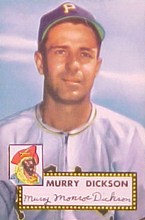
A Clubhouse Comment by Legendary Pitcher Murry Dickson


I was to be discharged from the Army on September 28, 1952. In early September of that year I received a letter from Pirates General Manager Branch Rickey, who, always ahead of the curve in scouting talent, wanted to take a look at the young players from the Pirates farm system that were about to be discharged from service. He asked if I could make it to Ebbets Field when the Pirates would be playing the Dodgers. 


Could I? Hell, I'd walk all the way to Brooklyn if I had to! With two other players on the 60th Regiment team, we drove to Ebbets Field early enough to await the arrival of the Pirates’ team bus.
When it arrived, I introduced myself to Bob Rice, the Pirates’ traveling secretary, and showed him Mr. Rickey's letter. He was unaware of the workout and took me to the clubhouse to meet manager Billy Meyer. Surprisingly, Billy Meyer didn't know anything about the workout either, but told “Doc” Jorgensen, the team trainer, to get me a uniform. I put on a major league uniform and stepped onto a major league field for the first time that day in September 1952 at Ebbets Field.
The only players on the '52 Pirates I had played with in the minors were Frank Thomas, Cal Hogue, and Dick Smith. Before batting practice I got into a “pepper game” and figured one of the coaches would inform me when they wanted me to work out. I heard nothing. As batting practice began I headed out to the outfield to shag fly balls. When the pitchers began to do their running, I thought, “I might as well join them.”
When batting practice ended, I anxiously wondered when someone would take a look at my pitching skills. I went back to the dugout when I noticed the starting pitchers were beginning their warm ups. Having played six years in the minor leagues, I knew I wasn’t going to do any throwing for anyone, so I headed back to the visiting team clubhouse.
The clubhouse radio was on and Red Barber and Vince Scully, who were doing the Dodger broadcast, went over the starting lineups. I began to undress and noticed the only player remaining in the clubhouse was pitcher Murry Dickson (1916-1989), who was then in the twelfth year of a twenty-year major league career. He had tasted champagne with the St. Louis Cardinal Championship teams in the 1940s and won 20 games in 1951 on a Pirates’ team that won only 64 games. He was the only truly qualified major league pitcher on the 1952 Pirates’ team that lost a record 112 games. I had been a huge Cardinal fan as a kid, and to be in the same clubhouse with Murry Dickson was a treasured moment.
Dickson was listening to the broadcast in the fist inning, with two out and Frank Thomas at bat for the Pirates. Thomas hit a low line drive to center field, which Frank thought Duke Snider had caught on the fly, but actually was trapped by Snider. I still recall the description of the play by Red Barber: “Thomas’ line drive was trapped by Snider in center field and he relays it quickly to Jackie Robinson at second base.” Excitedly, Barber continued, “Now Thomas is heading into center field and Robinson is chasing him, and tags him for the final out in shallow center field.”
Dickson, who had seen a lot of ugly baseball that season, said “They ought to send some of these guys so far into the minor leagues that even 'The Sporting News' couldn't reach them.” 


(Image from Gary Bedingfield's website, Baseball in Wartime http://www.baseballinwartime.com)

21 June 2009

What is a "Cur Dog"?


From the Basball Biography Project

 “Nellie was able to keep a positive attitude and strong faith that things happen for a reason. He had great admiration for Pirates General Manager Branch Rickey* and enjoyed quoting his parables. 

One of Nellie's favorites concerned the nature of happiness. "Mr. Rickey likened happiness to a 'cur-dog.' There was a worker who was busy painting a garage. Just as he was beginning to paint he noticed a cur dog [a "mutt"] nearby. Fascinated by the dog, he reached down and tried to pet the animal. As soon as he did, the dog ran away. So the painter returned to his job and soon the dog returned. The dog nudged his leg; unaware of the dog, the man kept painting and whistling. Suddenly he felt the dog reaching up and pawing at his thigh. 

Mr. Rickey would go on to explain, 'That's what happiness is. You can't go out looking and searching for it, if you do, it will escape from you and run away like that cur-dog. But if you go about your work, enjoying it, happiness will be there right beside you.'"

Written by Nellie's good friend, Baseball Writer Bob Hurte.

 * Wesley Branch Rickey was an innovative Major League Baseball executive best known for two things: breaking Major League Baseball's color barrier by signing African American player Jackie Robinson and later drafting the first Hispanic superstar Roberto Clemente; and creating the framework for the modern minor league farm system, as well as introducing the batting helmet. His many achievements and outspoken Christian faith earned him the nickname "the Mahātmā."

The Thirty-Year Journey of a Major League Baseball Pitcher and Broadcaster